Why is the Moon in our logo?
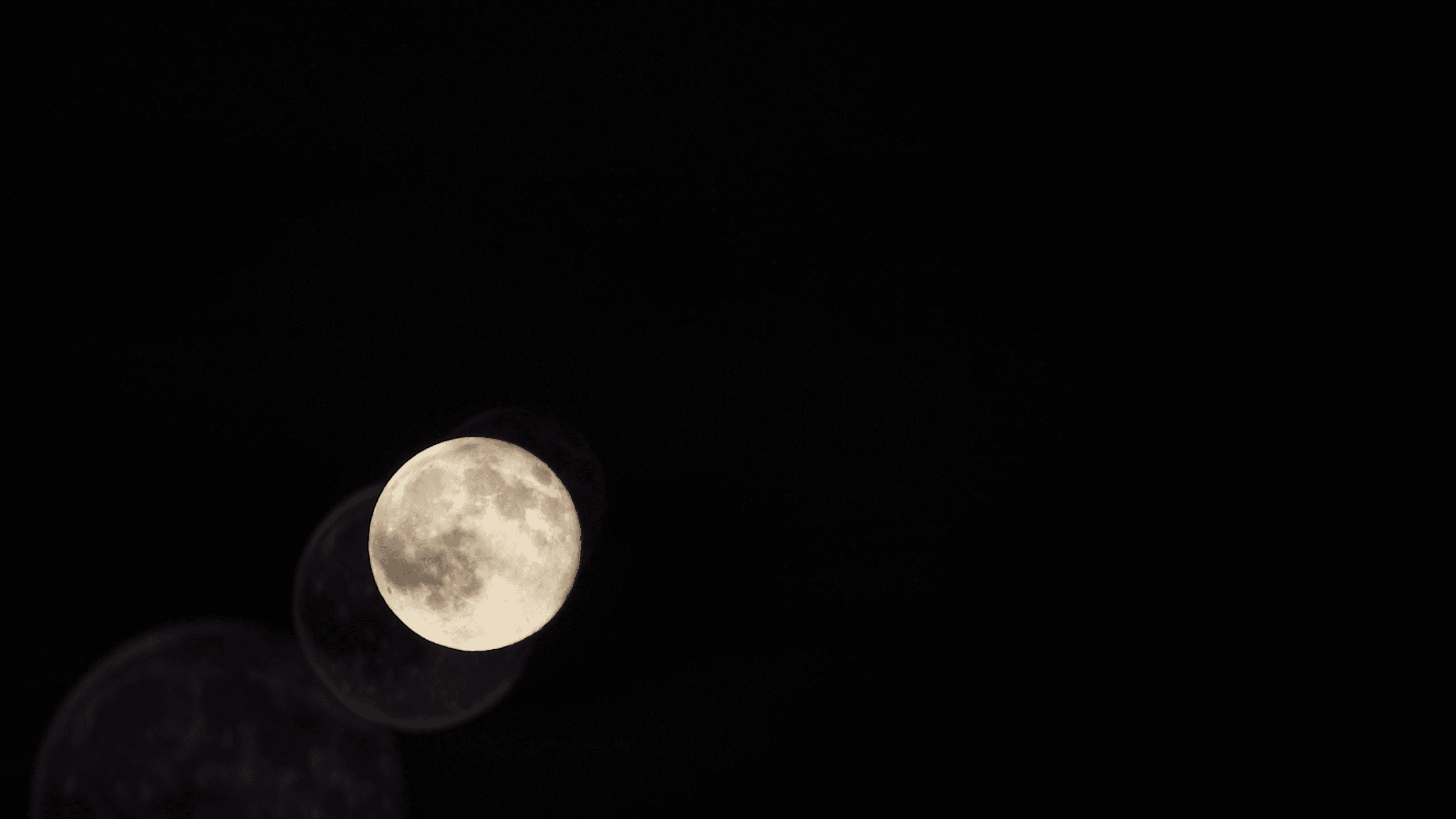
There's a Moon in the logo for TheFlow. You may wonder why. Here's why
For most of my life I’ve worked at the intersection of science and art, intuition and engineering. Finding the hidden connections at those intersections is an adventure unlike any other, exploring a vast frontier where unknown truths wait to be discovered. When I led product and design at Intuitive Surgical, I developed highly-complex, life-saving technologies while integrating elevated art. Some argued the artwork was unnecessary, but for me, anything less felt it would not honor the work.
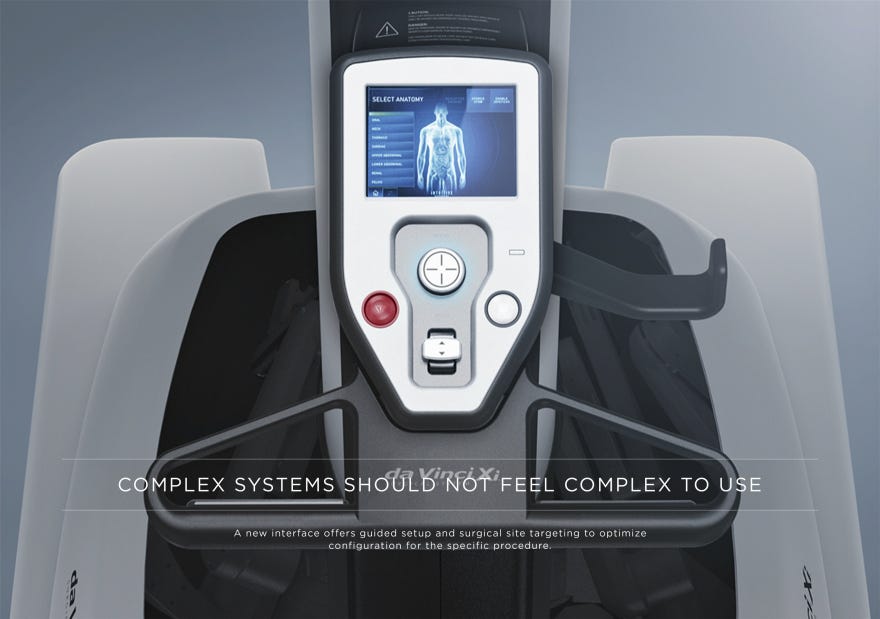
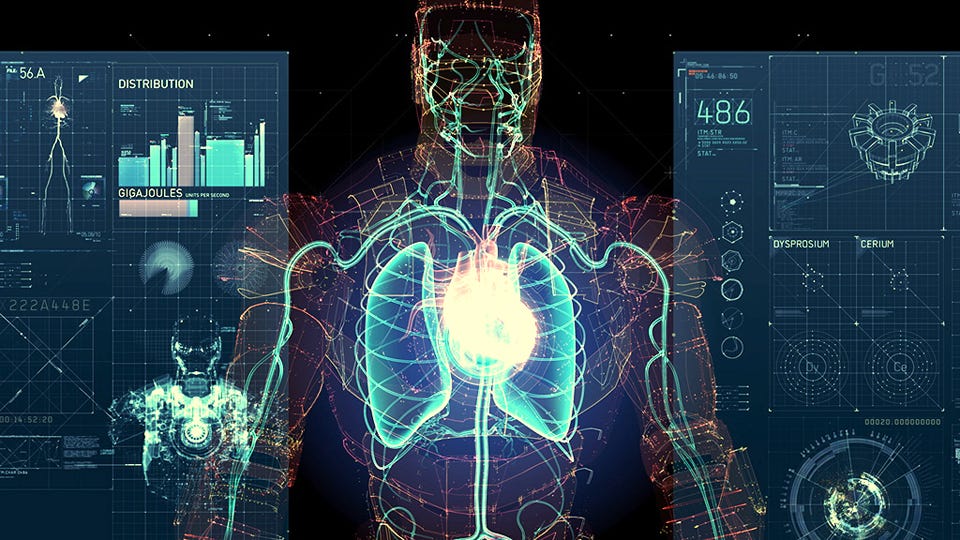
The Da Vinci Xi Surgical System with artwork by Danny Yount, legendary Creative Director for movies like Iron Man, Tron, Blade Runner, Kiss Kiss Bang Bang, and Six Feet Under
TheFlow exists in the same space. We’re developing technologies that connect us all and shape the very fabric of society. It is a creator owned ecosystem to empower and amplify our humanity.
When the Moon was included in the logo, it was a simple act of intuition. A string of funny coincidences involving the full moon had happened since the inception of TheFlow and it just felt like something beautiful to incorporate. Last night I met a couple of dogs named Mo and Moon. Moon was found on the night of a full moon, the Flower Moon to be exact. For some reason that story made me wonder if there was a deeper relationship between the Moon and flow. I started digging and what I discovered reframed how I think about consciousness, creativity, and life itself. Turns out the Moon isn’t in the logo just because of coincidence, it’s there because the flow, in all its forms, literally began with the Moon.
Moondance: The Birth of Flow
In the early days of our solar system, it was chaos. Four and a half billion years ago, Earth spun wildly through space, wobbling unpredictably on its axis, its days lasting only 5 hours. Its surface was a molten hellscape, scarred by an endless bombardment of cosmic debris. Our most widely-accepted theory is The Moon originally formed because of a collision. A Mars-sized body struck our young planet with such force that it ejected enough material to form the Moon. Out of that collision, a dance began that would orchestrate the very rhythm of all life to come.
What emerged was the conductor of Earth's habitability. The Moon slowed our frantic spin and stretched our days into a livable tempo. Our 5 hour day became 24 hours and Earth's axial tilt started to hover around 23.5 degrees, steady enough for the climate to sustain complex ecosystems. Without this, Earth would tumble through space like a spinning top, veering between wild extremes of ice and fire. Instead, the Moon gave us seasons, predictable and cyclical changes that became the scaffolding for evolution.
This was the birth of flow on Earth, in its most fundamental form, a rhythm life would learn to follow. The length of days, the cycle of seasons, the rise and fall of tides became our planetary heartbeat.
From this primary pulse, all other forms of flow would emerge: biological rhythms, consciousness, creativity, connection, and the flow state itself.
The Moon is the shaping force that transformed Earth’s orbit from chaos into a world capable of emergent evolution. It is more than a companion. It is the originator of flow; a celestial synchronization that gave our planet the rhythm from which all life on Earth emerges.
A World Sculpted By Rhythm
While the rhythm of the Earth and Moon rocked the world gently, life on the planet began to dance. From the beginning, wind and flowing waters carved and sculpted the land, wearing down mountains grain by grain and depositing sediments in vast deltas. Rivers meandered across continents in wavelengths typically 10 to 14 times their width, shaped by seasonal floods and droughts. Coastlines were carved in fractal patterns by the endless pulse of waves and tides, with the Moon's gravitational force creating tidal cycles averaging 12 hours and 25 minutes. Mountains weathered into flowing forms as freeze-thaw cycles split rock along ancient fault lines, cycling daily in some climates, seasonally in others. Even the atmosphere developed its own rhythms: trade winds, monsoons cycling every few years, El Niño and La Niña patterns every 2 to 7 years, and weather patterns all flowing in cycles that connected land, sea, and sky.
From this flowing foundation, life began to emerge from the primordial waters. Light and dark became life's first metronome, marking Earth's 24-hour rotation. Organisms learned to time their most vital processes with the predictable pulse of day and night. Plants began photosynthesis in daily cycles, opening and closing their stomata in rhythm with the sun. Warm and cold seasons created larger movements of growth and dormancy across Earth's 365.25-day orbital cycle, with trees recording these annual rhythms in their growth rings. The rise and fall of tides carved out entirely new realms where life could experiment at the edges of land and water.
What happened next was a profound synchronization. Animals evolved and survived precisely because they timed their activity and rest with the cycles of the sun and moon. Daytime creatures emerged to hunt and forage when light revealed opportunity. Nocturnal animals found safety and sustenance in darkness. Sleep itself became a survival strategy, allowing organisms to conserve energy and repair during their inactive cycles. Even at the cellular level, circadian gene expression began cycling every 24 hours.
Entire ecosystems bloomed around these celestial rhythms. Coral reefs demonstrate remarkable lunar synchronization, with many species timing their annual spawning to specific lunar phases. The Great Barrier Reef's mass spawning events occur 4-6 nights after the full moon in spring, with billions of coral polyps releasing eggs and sperm simultaneously across thousands of square kilometers. Cycles of precipitation brought seasonal rains that awakened dormant seeds and triggered mass migrations spanning thousands of miles on precise schedules. Forests pulsed with the rhythm of wet and dry seasons, their succession unfolding over timescales of decades to centuries. Arctic animals timed their breeding with the midnight sun and polar nights. Predator and prey populations began cycling together in predictable patterns, like the famous 10-year cycle of lynx and snowshoe hares where each species' numbers rise and fall in mathematical rhythm with the other.
Through deeper time, even grander rhythms emerged. Ice ages cycled roughly every 100,000 years, advancing and retreating across continents in response to orbital variations. Underground, mycelial networks began weaving the first internet of the natural world. These fungal threads connect forest ecosystems in vast webs of communication and resource sharing, pulsing nutrients and information between trees in rhythmic flows that mirror the tidal exchanges above ground. In the great natural cathedrals of Yosemite, the Amazon, and the ancient forests of redwoods and bristlecones, we witness the Moon's patient artistry, working through wind and water across millennia to carve valleys, nurture towering groves, and create the living monuments where some of these networks have maintained their flow for thousands of years; living libraries of rhythm that predate human civilization.
From this planetary choreography of stone, water, wind, and life, something new was about to emerge. The stage was set for a new level of consciousness to join the dance.
Rhythmic Intelligence
The earliest humans emerged with rhythmic processes well ingrained within their bodies by millions of years of lunar and solar cycles. Human circadian clocks run at about 24.2 hour cycles. With daily light exposure, our clocks drop 12 minutes and synchronize precisely with the sun's 24-hour journey. Women's menstrual cycles average 28 days, and research suggests a meaningful connection to lunar cycles under natural conditions. Studies show that about a quarter of young women living with natural light and without artificial schedules begin their periods during new or full moon phases; significantly more than would occur by random chance. Hearts beat steadily at 60 to 100 beats per minute. Breathing rises and falls at 12 to 20 breaths per minute. Even our brainwaves pulse in measurable patterns: delta (0.5-4 Hz), theta (4-8 Hz), alpha (8-13 Hz), beta (13-30 Hz), and gamma (30+ Hz), that serve as the foundation for consciousness and cognitive function.
Early humans lived immersed in acoustic environments rich with sophisticated musical communication. Wolves howled in coordinated pack harmonies as they carried out their hunt. Songbirds sang complex territorial songs at dawn. Mammoths trumpeted low-frequency calls and stomped their feet sending signals for miles through ground and air. Frogs vocalized from wetlands in rhythmic evening calls. And during summer nights, crickets played the oldest of old time fiddle shows on earth. Our ancestors heard the rhythmic percussion of rain on stone, the whisper of wind through leaves. The natural world was alive with rhythm and melody.
Archaeological evidence shows that by 40,000 years ago, humans were carving flutes from mammoth ivory and bird bones, with the oldest known musical instruments including the Hohle Fels flute from Germany (35,000 years old) and the potentially older Divje Babe flute from Slovenia (60,000 years old). Cave paintings are often found in chambers with striking acoustics, suggesting that ritual, sound, and imagery were bound together from the beginning. Though exactly how this musical capacity emerged remains one of the beautiful mysteries of human evolution.
What we do know from neuroscience is that music and language developed together, sharing neural pathways and relying on similar temporal processing mechanisms. The musical elements of early human communication (rhythm, melody, and repetition) provided the foundation for complex language. Even today, infants respond to the musical qualities of speech (prosody) before understanding words, and research shows that musical training enhances phonological awareness and language acquisition abilities. Human speech patterns emerged with musical cadences. Conversations followed structures that helped information flow between minds. Stories developed rhythmic frameworks that made them easier to remember and share across generations.
As human consciousness evolved, so did our awareness of the cosmic cycles. Cultures worldwide created rich traditions around the lunar calendar. The Harvest Moon marked gathering time for farmers. Islamic communities structured their entire calendar around lunar months. Jewish and Christian holidays followed lunar calculations. Buddhist communities marked Uposatha days with new and full moons. Travelers and navigators timed journeys by moonlight, using its brightness for safe passage through unfamiliar terrain. Coastal people scheduled ceremonies, fishing, and hunting with lunar phases; structuring their entire ways of life around tidal rhythms. These weren't arbitrary customs but cultural technologies that helped communities stay synchronized.
Within their communities, humans discovered something remarkable about moving and singing together. When they gathered in groups, matching each other's rhythms through movement and voice, something profound happened that they could feel but not yet measure. Modern research using heart rate monitors and EEG has revealed what our ancestors experienced: people listening to music together demonstrate measurable synchronization of heart rate variability and brainwave patterns, with their breathing synchronizing within 6 breaths per minute, creating what neuroscientists call "neural coupling."
This is the foundation of flow state. The neurochemistry of flow reveals our brains shift toward alpha frequencies (8 to 13 Hz) and theta frequencies (4 to 8 Hz) while releasing dopamine, norepinephrine, anandamide, serotonin, and endorphins creates optimal states for learning, creativity, and peak performance. And recent research from just a few months ago has revealed even deeper rhythmic mechanics behind human intelligence. When we focus deeply or face mental challenges, our brains coordinate their internal rhythms and this appears to be one of the engines behind attention, reasoning, and the flow state.
It turns out, when our brains are at their best, we can fluidly adjust our internal rhythms to match each moment's demands.
Flow represents humanity's ultimate gift: the ability to consciously rejoin the cosmic dance that began with the Moon's formation. When we achieve flow, we become living embodiments of rhythm itself; the Moon's gift to Earth, evolved into self-aware participation in the symphony of existence.
Beneath it all lies a deep truth: the Moon is the great synchronizer. It provided the first tempo for life on Earth, and its rhythm has echoed ever since. The Moon taught the Earth to flow.
The Ecosystem
In a system, when each part contributes to the whole, something greater than the sum of its parts can emerge. Think of an orchestra: every instrument has its own line, but in harmony they create music that moves us in ways no single voice ever could.
In nature, the highest expression of this harmony is the ecosystem, the ultimate example of everything working together. At its core, the universe is a minimalist. Nature favors simplicity and efficiency, and the most resilient structures are those where every part sustains the whole. These systems grow stronger over time because energy moves in cycles. By contrast, arrangements that only take without giving back eventually and inevitably collapse. They’ve literally never been able to establish themselves as a lasting system in the history of the Earth. This rhythm is clearly fundamental, and echoes throughout every level of existence.
The oldest and most successful of these systems is the vast mycorrhizal web beneath our feet. This underground network is 475 million years old, nearly half a billion years of successful mutualistic existence. Nothing else in the history of life even comes close. It predates forests, supports nearly every plant on Earth, and continues to thrive today. Mycorrhizal fungi link trees and plants into living webs that span entire landscapes, moving nutrients, water, and even warning signals across species. They have survived mass extinctions, ice ages, and the shifting of continents. Their strength is not in dominance but in reciprocity. They endure because every participant flourishes when the network does.
At the center is rhythmic coordination. Fungi send electrical pulses through their filaments. Plants release chemical signals that rise and fall with the turning of the day. Together they form an underground symphony, constantly reorganizing to solve problems, share resources, and keep the forest alive. This is the original internet of life: ancient, hyper-connected, and still shaping the future of every ecosystem on land.
Extractive strategies, by contrast, never build lasting systems. Locust swarms strip landscapes bare, but soon collapse from starvation. Bark beetle outbreaks ravage forests, yet burn themselves out when their hosts die. Red tides bloom explosively, only to crash when oxygen is depleted. These episodes are dramatic, but they are temporary. Across Earth’s history, no extractive arrangement has ever matured into a self-sustaining ecosystem. They flare and fade, leaving the regenerative networks to carry life forward.
Humanity has not yet found its enduring mutualistic structure. But we are young! To date, our economies, our technologies, even our cultures often operate like outbreaks, powerful in the short term but destabilizing over time. And yet, the blueprint is all around us. Nature shows that when reciprocity and rhythm guide a system, it can last for hundreds of millions of years. When humanity discovers its own way of building in that pattern, the possibilities will be profound beyond measure.
A Return to Flow
Over the past century, we've gradually disconnected from the ancient rhythms that shaped our biology for millions of years. Electric lighting replaced natural darkness. Alarm clocks overrode sunrise. Air conditioning eliminated seasonal changes. Scheduled work weeks overrode seasonal rhythms. Light pollution erased the stars from most people's lives entirely. As we've disconnected from natural cycles, we've seen explosive increases in sleep disorders, depression, and chronic conditions. Shift work disorder affects 10-40% of night shift workers and seasonal affective disorder impacts ~5% of the U.S. population annually.
Meanwhile, communities like the Hadza tribe of northern Tanzania still live by natural light cycles and show remarkably different patterns: flexible sleep and far lower rates of modern mental health issues. Research shows that just one week of camping without artificial light restores healthy circadian rhythms within day, with participants' melatonin production starting earlier in the evening by an average of 2.6 hours. Our ancient capacity for cosmic attunement remains, waiting to be rediscovered.
We are living in extraordinary turmoil. Old systems are crumbling around us: economic, social, technological. The entire media landscape is transforming: record labels, traditional radio, movies, television, journalism, newspapers. While the world seems to be coming apart, nature teaches us that this is exactly when something new emerges. Forest fires clear away what no longer serves, leaving the strongest roots intact and fertile ground for new growth.
Where every story ends, another begins. From this fertile ground, something beautiful is emerging. It's a creator ecosystem where artists, writers, musicians, and creators of all kinds are taking direct control of their work and their relationships with audiences. We're here to serve this transformation. We're starting with music because musicians have always been at the forefront of cultural change, but this is about empowering all creators to build sustainable, authentic careers.
Just as the Moon created the flowing systems that nourish all life, TheFlow has been designed to nourish human creativity and authentic connection. Built on natural principles of reciprocity and mutualism, it mirrors the way healthy ecosystems work where every element supports the whole. This is a different kind of technology: one that brings us back into harmony with what makes us human. We're not fighting anything. We're choosing to shine light only on what we want to see grow and flourish. Where our attention goes, our future flows.
On TheFlow, attention flows naturally through systems that amplify the best of our humanity. Money flows directly to creators through transparent economics where your support reaches the artists whose music moves you. Community flows along authentic connections, creating collective experiences where genuine expression is celebrated with resonant acts of sharing.
In our hyperconnected age, we have an opportunity to write a new story where we return to our natural rhythms; to be deeply connected to ourselves, to each other, and to the world around us. When we find flow, we remember that we are part of a cosmic choreography that began with chaos and became harmony, that embraced a collision and became connection.
For me this was an incredibly fun way to explore all these connections and reflect on what they mean for this creator-owned ecosystem we've built. We're so excited to show you… and soon.
In the meantime, this feels like an invitation to reconnect with nature and let our ancient rhythms guide us into this creative future we're meant to build together.
The Moon in our logo isn't just a symbol anymore. It's a beautiful reminder of the deeper rhythm that connects us all.
Written by Mike Hanuschik: Founder of TheFlow
Follow Mike on Substack