Last year Independent Creators Quietly Became The Most Powerful Collective on Earth
In 2025 creators took over the world without knowing it. This year, we'll recognize the full extent of our collective power and begin to be paid fairly.
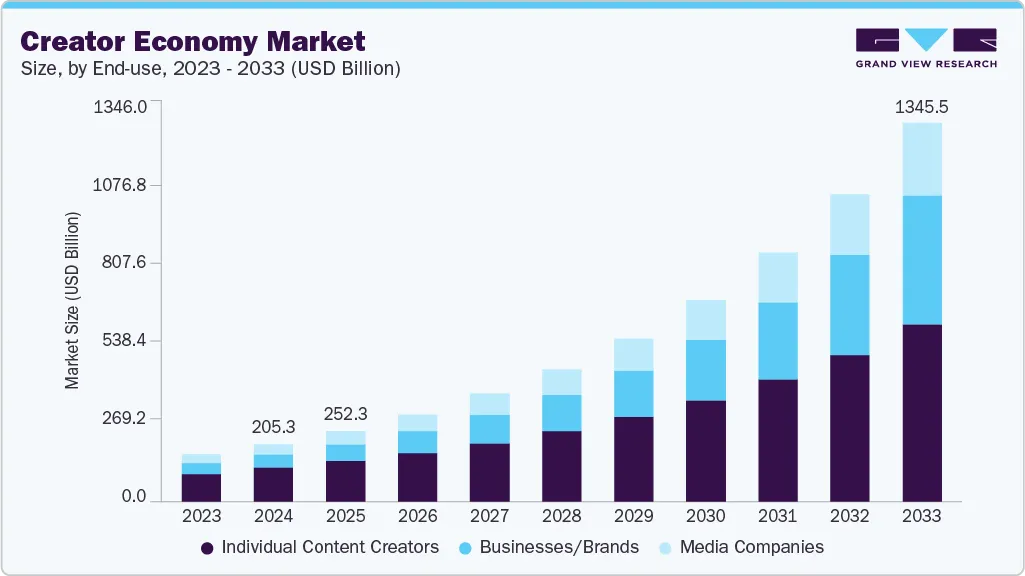
In 2025, advertising revenue tied to creators eclipsed that of all traditional media combined. Independent creators, once seen as hobbyists on the margins of culture, have quietly overtaken traditional media in the measures that matter most: revenue growth, time spent, and cultural influence. The platforms that trained them now face a mass disruption of their own making. A profound transformation in global media is underway, and it is easy to miss the enormity of its scale because it is happening in fragments.
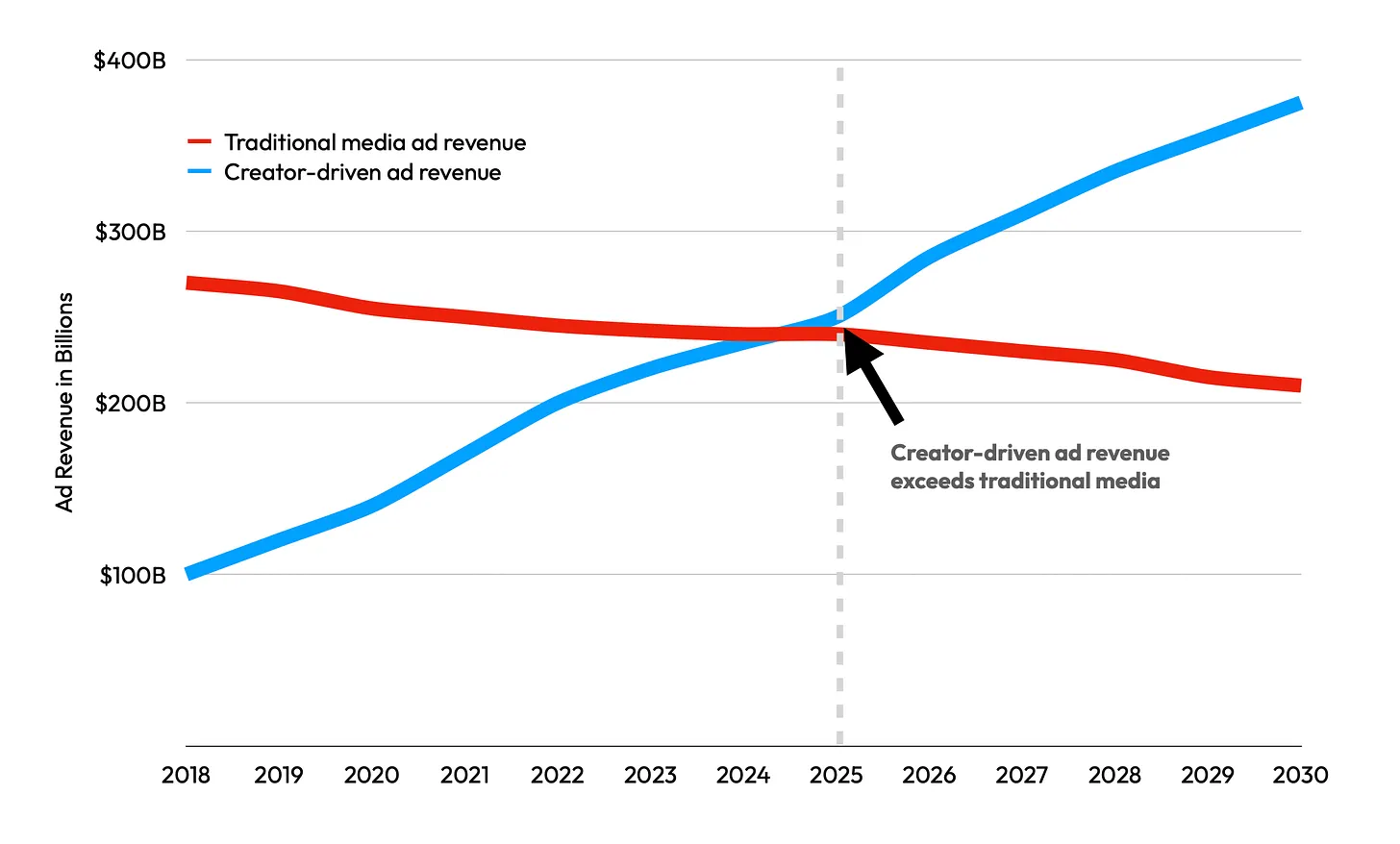
Creator-driven ad revenue was around $100B in 2018 rising to $250B in 2025 while crossing traditional media ad revenue. It is projected to be $375B in 2030.
Major agency forecasts from WPP and others projected creator‑driven advertising at about 250 billion dollars globally by 2025, with projections rising to roughly 375 billion dollars by 2030, and creators themselves capturing most of that value through revenue sharing, brand deals, and direct monetization.
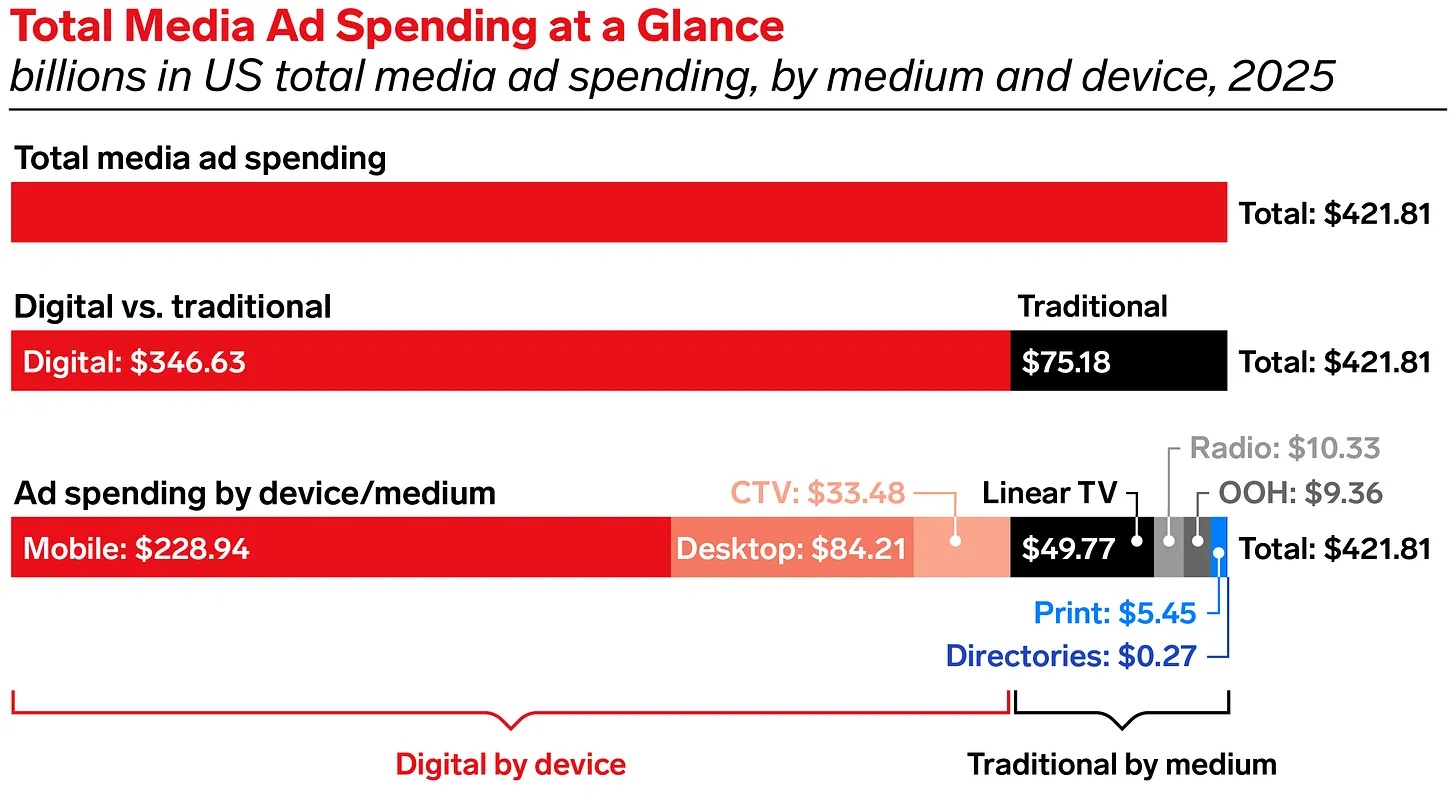
Note: includes digital (desktop/laptop, mobile, and other internet-connected devices), directories, magazines, newspapers, out-of-home, radio, and TV, Source: EMARKETER Forecast, March 2025
The Future Is Ours To Create
What is emerging is not just a new media category but a new center of cultural and economic power. Independent creators are already dominating traditional media and make up the vast majority of the global creative workforce.
The profound opportunity is that the collective already exists - the skills, the audiences, and the economic leverage. We simply have to realize our shared position, so we can align around systems that reward our work fairly and sustainably.
What comes next is understanding we are not fragmented competitors but participants in the largest collective in history.
The entire media landscape needs a new home. A place where the value creators generate stays within the ecosystem that produced it, circulating back to strengthen the community rather than flowing outward to investors. TheFlow is building that home as a cooperative, owned and governed by the artists and creators who use it.
The Flourishing Creator Economy
The broader creator economy is expanding even faster. Goldman Sachs valued the sector at about 128 billion dollars in 2024 and forecasts growth to around 528 billion by 2030, representing a compound annual rate of roughly 22.5%. Some analysts project even higher, with estimates reaching about 1.5 trillion dollars by 2034.
Audience behavior is driving the economic shift. A recent survey by the Pew Research Center found that 54% of U.S. adults say they get news from social media at least sometimes, while about one‑third say they often get news from television. For the first time, social media has effectively replaced television as their main pathway to news. About one‑third of adults now regularly get news on Facebook and on YouTube, while growing shares turn to Instagram (around 20%), TikTok (around 17%), and X (around 12%).
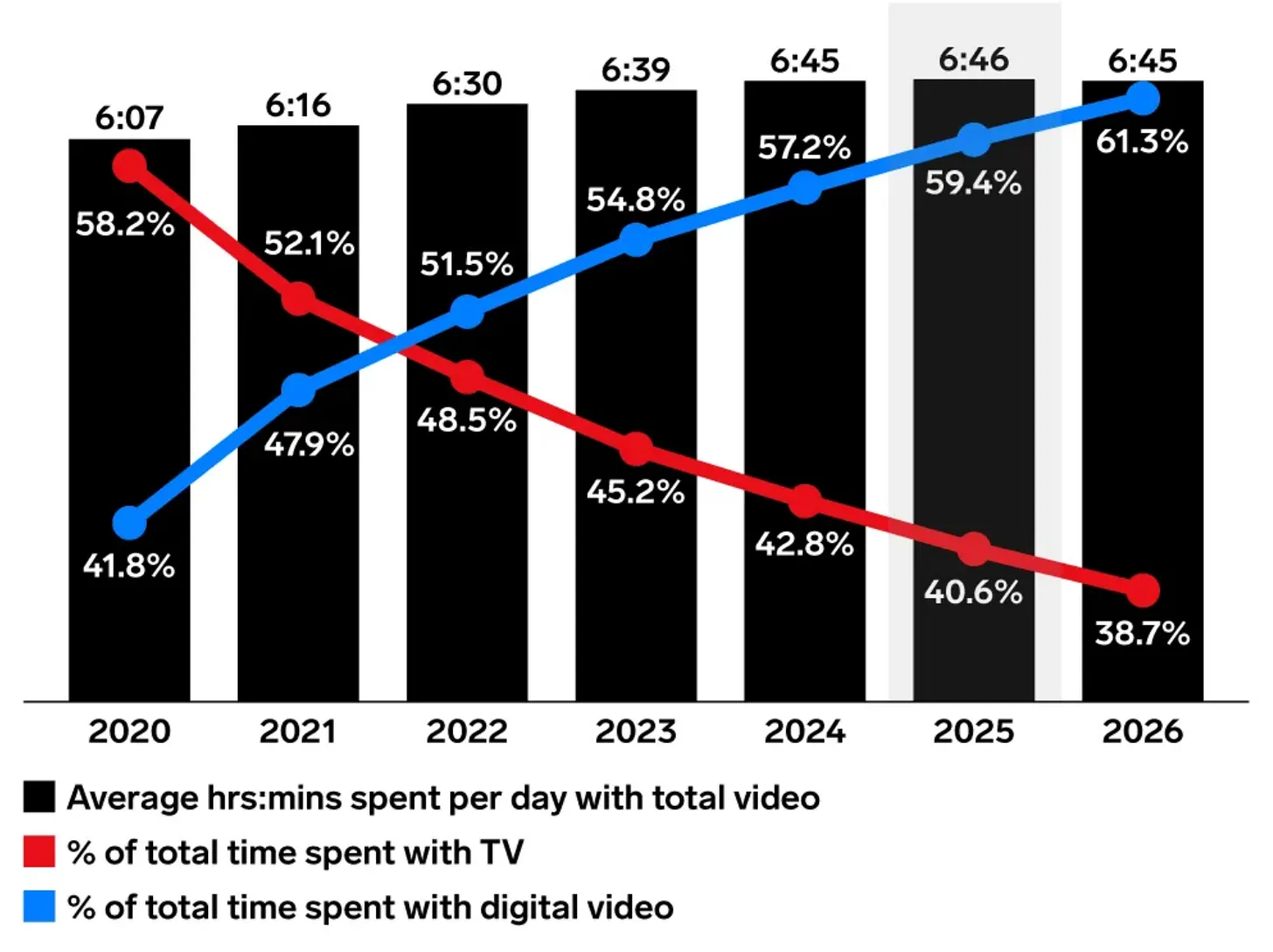
Digital video’s share of total video time. Source: EMARKETER Forecast, Jan 2025
YouTube alone has paid out over 100 billion dollars to creators, artists, and media companies since 2021, according to company disclosures. More than 207 million people worldwide now identify as creators, including over 45 million working professionally. By comparison, the global workforce of traditional media, including journalists, editors, producers, and staff across television, radio, print, and film, numbers only in the hundreds of thousands, even after accounting for digital outlets. The creative economy now encompasses well over a quarter of a billion people, the vast majority of them independent creators.
Unintended Self-Disruption
What makes this transformation striking is how it was engineered. None of the major platforms set out to build a generation of independent competitors. Yet in optimizing for growth, they did exactly that.
YouTube taught video production, analytics, and audience development. TikTok demonstrated viral content mechanics. Instagram refined visual storytelling. Onlyfans proved that direct monetization was possible. Patreon established subscription frameworks.
Together, they created what one can describe as the largest entrepreneurship program in history. Millions of us have been trained to think like media companies.
The result is a workforce of creators who now understand audience building, engagement optimization, and revenue diversification as deeply as executives in legacy institutions.
Surveys show that 73% of full-time creators with more than 25,000 followers operate three or more revenue streams. We have learned to function not as single-channel entertainers but as diversified media businesses.
Perhaps most telling is the realization that audience loyalty increasingly transcends platform loyalty. When high-profile creators such as Ninja moved from Twitch to Mixer, TimTheTatman shifted to YouTube Gaming, or Joe Rogan signed with Spotify, large portions of their audiences followed. Even when platforms faltered, as Mixer did after signing Ninja, creators carried their core communities with them. Spotify reported a 232% increase in overall podcast consumption during the period that included Rogan’s exclusivity, underscoring how a single flagship creator can help shift listening behavior across an entire platform.
Digital video’s share of total video time. Source: EMARKETER Forecast, Jan 2025
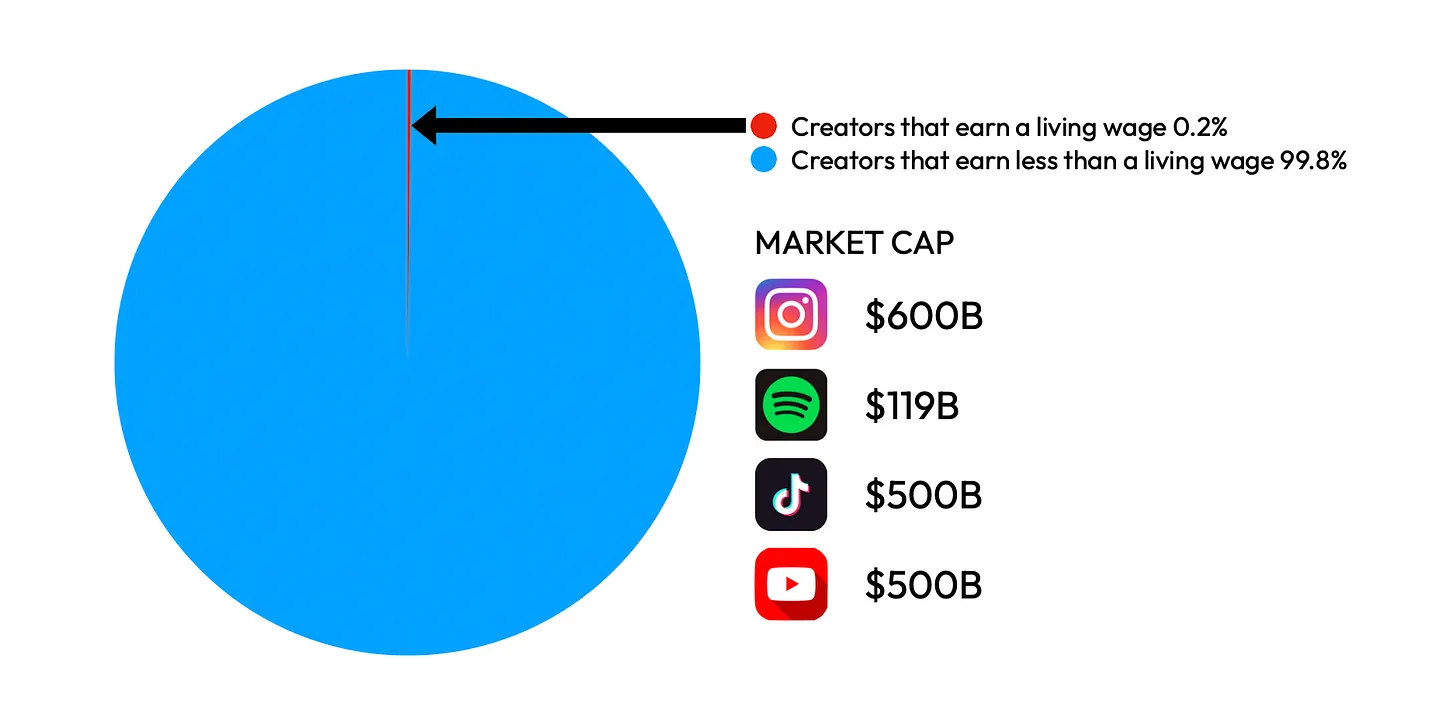
Beneath the headlines of billion-dollar payouts and trillions of dollars in market cap the overwhelming majority of creators cannot currently make a living.
This extreme imbalance has set the stage for an incredible opportunity, a mass migration, the likes of which the industry has never seen before.
The numbers tell the story:
YouTube: Only about 0.3% of creators earn enough to approach a living wage, according to Riverside’s 2024 analysis of channels with 100,000+ subscribers.
Spotify: Roughly 0.1% of artists are able to support themselves from streaming, with Rolling Stone reporting that 90% of all streams go to just 43,000 artists out of 11 million.
TikTok: Fewer than 0.1% of contributors earn a sustainable income. Creator Fund payouts are notoriously low, with even millions of views often worth only a few dollars.
Instagram: Direct payouts are negligible. The platform offers little in the way of revenue sharing, meaning virtually 0% of contributors earn a living directly from Instagram itself.
More than 99% of creators have not been able to survive on our content income, even as we collectively generate more advertising revenue than all traditional media combined.
It is a system in which billions in value are created by millions of creators who have been kept economically undervalued. Big tech platforms capture the profits while we subsidize their growth with unpaid or underpaid labor.
Collective Inevitability
The contradiction is unsustainable. Millions of technically capable individuals now control the direct relationships with audiences that once belonged to corporations. They understand the economics of media as well as the platforms themselves. And they are united not by geography or ideology but by aligned interests and shared values: creative freedom, fair compensation, and sustainable work.
The numbers are too large to ignore. More than 240 million people worldwide now make up the creative workforce, including 207 million independent creators and roughly 30 million employed in traditional media.
Creators outnumber the global teaching profession and healthcare workforce combined and 7% of the 3.5 billion people employed on Earth. Only agriculture employs more people.
To be clear, the division is not between old media and new. It is between all creative workers and the extractive systems that have prevented them from prospering. Whether you are a journalist watching your newsroom shrink, a musician earning pennies per stream, or a video creator struggling despite millions of views, the underlying problem is the same.
A group of this scale has never been fully realized before. We are finally understanding our value and power.
We don’t need to be organized into a movement. We are already a collective.
We’re reclaiming music first by solving the only problem that matters in that industry - enabling musicians to make a sustainable living.
We’ve started by revolutionizing streaming and maximizing the payout there. With our paid attention streaming model money from listeners now goes directly to the artists they listen to. This multiplies the conventional streaming rate by over 6x on average. But even with vastly superior streaming economics, it isn’t enough to enable a sustainable living for artists.
Adding the ability to purchase music outright helps, but one-time sales can’t sustain a career between releases. True sustainability requires a third pillar: recurring support from dedicated fans. TheFlow combines all three - streaming payouts based on actual listening time, digital downloads with artist-controlled pricing, and Backstage Pass subscriptions starting at $3/month.
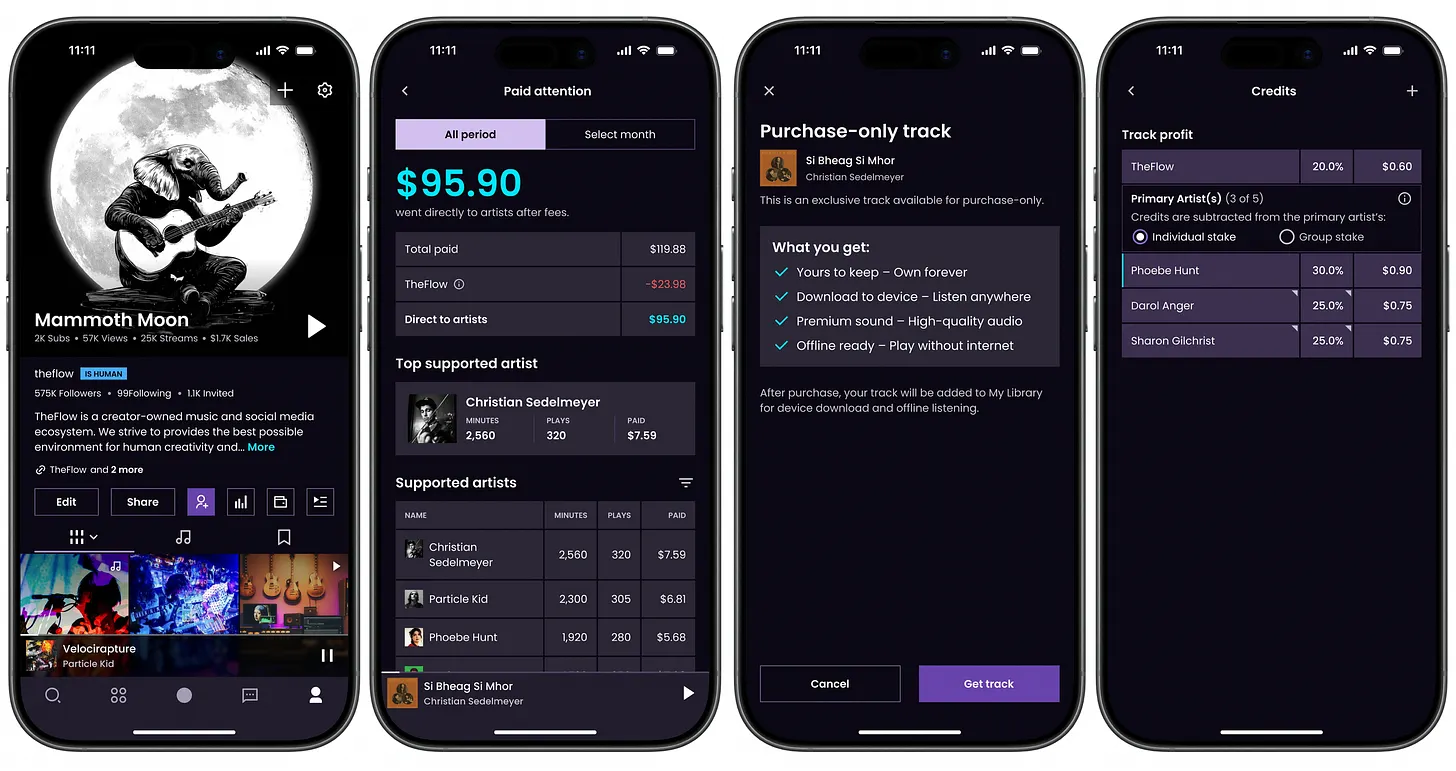
Screenshots from TheFlow
With Backstage Passes an artist only needs a little over 3,600 dedicated subscribers to earn over $100,000 annually. That’s an achievable framework for a sustainable future.
And it’s not just for musicians. TheFlow already supports up to 10 minute videos, opening the door for journalists, educators, entertainers, influencers, and any creator building a direct relationship with their audience. The same economics apply.
TheFlow is currenty beta testing. We will fully launch very soon, and once people start getting paid fairly, there will be no turning back.
The collective is here.
Join us on TheFlow, sign up to our waitlist.